Aug 12, 2026 | JDS Adhesive
In plywood manufacturing, adhesive mixing directly affects bonding performance and final product quality. Many issues—such as inconsistent viscosity, uneven glue spread, weak bonding, and delamination—may actually result from improper mixing rather than the adhesive itself. Yet, the mixing process is often overlooked when troubleshooting. Proper adhesive mixing is therefore essential for consistent plywood production.

What Happens During Plywood Adhesive Mixing?
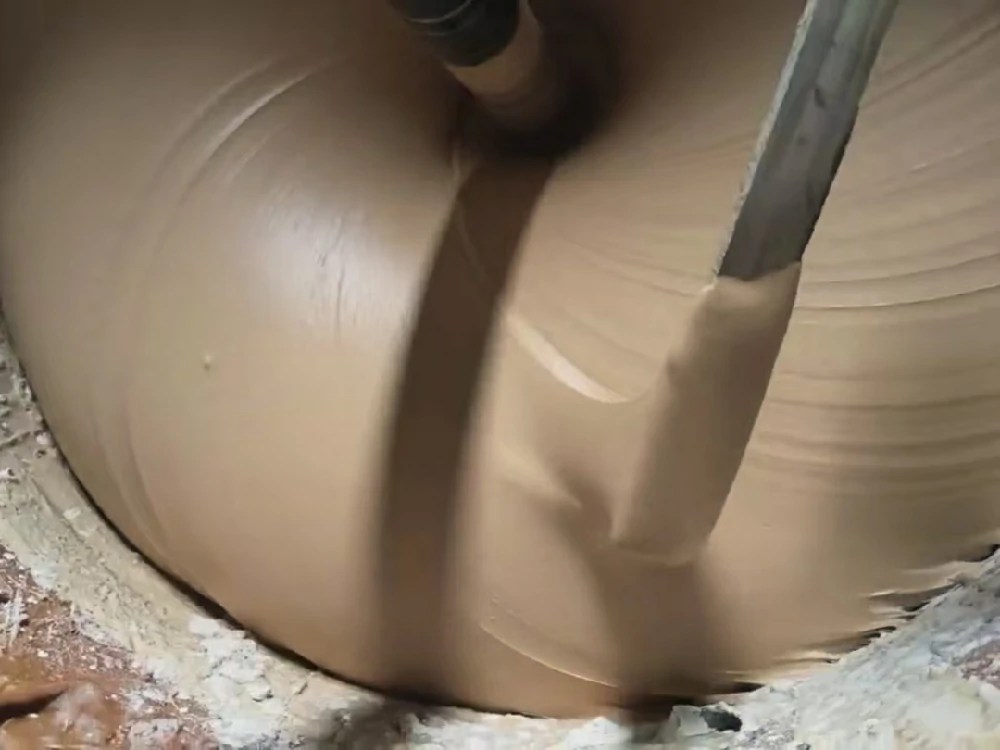
For plywood manufacturers using powder-form adhesive, adhesive mixing is the process of converting the dry adhesive powder into a water-based adhesive solution before it is applied to the veneer by the glue spreader. Unlike conventional UF resin, which is typically prepared through a resin synthesis or cooking process, powder adhesive requires a different preparation approach and specific mixing procedure.
Before discussing the mixing process itself, the first step is choosing an adhesive that is suitable for powder formulation. Not every adhesive chemistry is suitable for conversion into a powder. Depending on its chemical and physical properties, some adhesives may lose functionality during powder processing or become economically impractical. Therefore, adhesive selection should consider the manufacturer’s location, plywood products, production process, available raw materials, and overall production costs.
Once a suitable powder adhesive has been selected, the next step is to prepare the adhesive according to the formulation. While the exact formulation varies depending on the adhesive system and plywood requirements, adhesive powder, water, and flour are commonly used components.
- Adhesive powder is the primary bonding component. It provides the adhesive system with its core bonding properties and ultimately determines key performance characteristics such as bonding strength, water resistance, and curing behavior.
- Water acts as the main medium for preparing the powder adhesive into a workable water-based adhesive. The amount of water affects the final solids content, viscosity, flowability, and application performance. Too much or too little water can make it difficult to achieve the desired glue-spreading properties.
- Flour is commonly used as a filler or viscosity modifier in plywood adhesive formulations. It can help adjust viscosity, improve the workability and spreadability of the adhesive, and control adhesive penetration into the veneer. The appropriate amount depends on the adhesive system, veneer characteristics, and production requirements.
What Happens When Plywood Adhesive Is Not Mixed Properly?
The effect of mixing on plywood bonding strength depends largely on the type and chemistry of the adhesive being used. Different adhesive systems bond wood through different mechanisms, so mixing is not simply about making the ingredients uniform. For plywood adhesives that rely on heat and pressure during hot pressing, such as urea-formaldehyde (UF), phenol-formaldehyde (PF), and bio-based HPA (hybrid polysaccharide adhesive) systems, proper mixing helps ensure that the adhesive reaches the intended physical and chemical state for application and curing. In particular, the mixing process is important for achieving consistent dispersion, hydration, viscosity, and reactivity of the adhesive components, which ultimately affects the quality and strength of the final glue line.
If the adhesive is not mixed properly, several things can happen:
- Uneven adhesive distribution:
Different parts of the glue mixture may have different concentrations or viscosities, resulting in inconsistent glue coverage. - Poor wetting and penetration:
An adhesive that is too viscous or poorly dispersed may not adequately wet the veneer surface, reducing the effective contact area between adhesive and wood. - Insufficient or uneven curing:
Variations in the adhesive formulation can affect how it responds to heat during pressing, resulting in areas with different degrees of cure. - Weak glue lines:
Poorly bonded areas may have lower cohesive strength and weaker adhesion to the wood, ultimately reducing plywood bonding strength. - Delamination:
When the adhesive fails to form a sufficiently strong and continuous bond, the veneers can separate, particularly under moisture or mechanical stress.
In many cases, these problems may appear to be adhesive-quality issues, when the underlying cause is actually improper adhesive preparation or mixing.
What Factors Should Be Controlled During Adhesive Mixing?
Several factors need to be controlled during adhesive mixing to achieve consistent viscosity, application performance, and bonding results. The most important considerations include the mixing ratio, raw material conditions, mixing equipment, and mixing volume.
1. Mixing Ratio: Start with a Formulation Tested for Your Production Conditions
For powder-based plywood adhesives, the mixing ratio is generally established as a mass ratio through preliminary testing before full-scale production. This is not necessarily a universal formula that can be applied to every plywood factory. The adhesive supplier and plywood manufacturer typically work together to determine a suitable formulation based on the actual production conditions.
Small-scale trials should take into account factors such as:
- Local climate and ambient temperature and humidity
- Factory environment and storage conditions
- Veneer species and moisture content
- Available raw materials
- Mixing and glue-spreading equipment
- Hot-pressing conditions
- Production practices and operator habits
After these factors are evaluated and tested, the resulting formulation can provide a practical starting point for production.
2. Why Can the Mixing Ratio Vary Slightly?
Even after an appropriate formulation has been established, the actual mixing ratio may require small adjustments from time to time. This does not necessarily mean that the adhesive formulation is unstable. Rather, the conditions surrounding the mixing process can change.
Common factors include:
- Climate and environmental conditions:
Temperature and humidity can affect water evaporation, viscosity, and the working behavior of the adhesive. - Equipment conditions:
Mixer design, rotational speed, tank geometry, and glue-spreading equipment can influence the final adhesive consistency. - Production practices:
Different factories may have different mixing sequences, operating habits, and process controls. - Water quality:
The concentration of dissolved minerals and electrolytes in the water can affect how certain adhesive components disperse and interact. - Flour type and specification:
Different flour varieties, particle sizes, starch characteristics, and moisture contents can produce different viscosity and flow behavior.
Therefore, once a mixing ratio has been tested and established for a particular factory, significant changes should not be made independently. If the factory changes its raw materials, equipment, process, or operating environment, it is advisable to consult the adhesive supplier before adjusting the formulation. A responsible adhesive supplier should be able to evaluate the change and provide recommendations based on the adhesive system and the manufacturer’s actual conditions.
3. Use a Proper Dispersing Disc for Consistent Mixing
For powder adhesive preparation, a dispersing disc is one of the most commonly used and reliable mixing tools for achieving a uniform mixture.
Unlike simple stirring, the rotating dispersing disc generates substantial shear forces within the liquid. These forces help break apart powder agglomerates and disperse particles that may initially become surrounded by water and form partially hydrated clusters. At the same time, the disc promotes strong circulation and turbulence throughout the mixing tank, allowing the powder to contact the water more efficiently.
This combination of shear, circulation, and turbulence can significantly improve mixing efficiency and reduce the risk of undispersed powder or localized differences in viscosity.
4. Choose an Appropriate Dispersing Disc Diameter
The diameter of the dispersing disc should also be matched to the mixing tank. As a practical guideline, a disc diameter of approximately one-half of the tank diameter is commonly used for effective circulation and shear.
If the disc is too small, it may not generate sufficient circulation across the entire tank, leaving areas with weaker mixing. If it is too large, the system can become unnecessarily turbulent and may consume more power or create undesirable vortexing and air entrainment.
The exact optimum still depends on the tank geometry, adhesive formulation, viscosity, and mixer design, so the 1:2 ratio should be treated as a practical reference rather than an absolute rule.
5. Keep the Mixing Volume Below Approximately Two-Thirds of the Tank Capacity
The volume of adhesive being mixed should generally not exceed about two-thirds of the tank’s working capacity. This provides sufficient headspace for the mixture to circulate and move effectively during high-speed mixing.
If the tank is filled too close to the top, there is less room for the adhesive to circulate and form the necessary mixing pattern. The increased liquid level can also make it more difficult for the dispersing disc to generate effective circulation throughout the tank. In addition, a high fill level increases the risk of overflow, splashing, and uncontrolled vortex formation, particularly as mixing speed increases.
Leaving adequate headspace therefore helps maintain a more stable mixing pattern and gives the dispersing disc enough room to generate the circulation and shear needed for uniform adhesive preparation.
How to Ensure Consistent Adhesive Mixing in Plywood Manufacturing
Consistent adhesive mixing requires more than following a fixed formulation. Close communication with the adhesive supplier is essential, especially when raw materials, equipment, environmental conditions, or production processes change. Manufacturers should provide relevant production information and work with the supplier to identify and resolve mixing issues. At the same time, operators should receive proper training to ensure consistent mixing practices, and outdated or unsuitable mixing equipment should be upgraded when necessary.
Once the mixing process has been properly adjusted and stabilized, it can provide a reliable foundation for long-term production consistency. When the formulation, equipment, and operating conditions are well matched, manufacturers can maintain stable adhesive performance over an extended period, rather than repeatedly troubleshooting the same mixing-related problems. This is why solving adhesive mixing issues at the source can have a lasting impact on plywood production stability.
Related Products
Explore HPA’s E0, NAF and WBP product systems, designed for seamless integration into existing UF production lines.
→ Learn more about HPA NAF/CARB P2 solutions
→ Learn more about HPA E0 solutions
→ Learn more about HPA WBP solutions
HPA Eco-Friendly Adhesive for Plywood & Engineered Panels
A low-emission HPA solution for plywood and engineered panels, helping manufacturers meet stricter environmental standards with formaldehyde-free technology and reliable bonding performance.